How to Play
The loop, the controls, the difficulties, and how to survive a shift at The Rage Co.
The premise
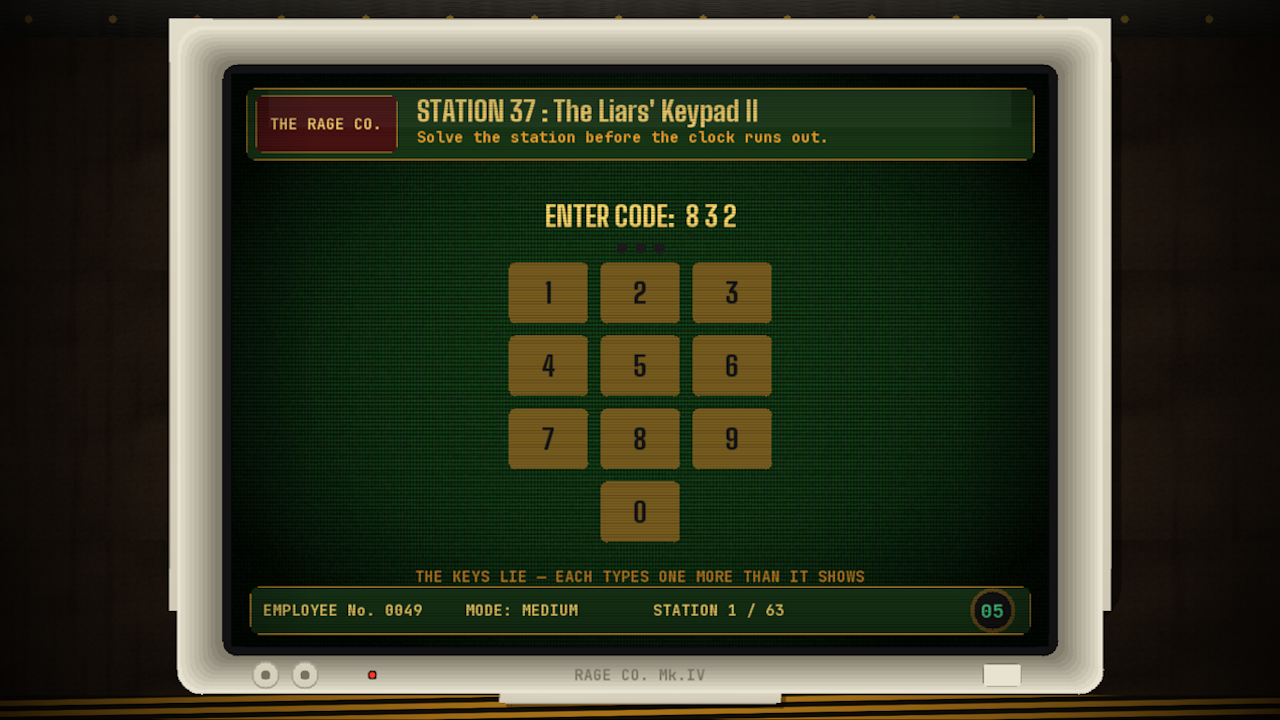
You're the newest hire at The Rage Co., a factory that runs on cruelty. Each shift is a run — a randomised sequence of stations. Every station is a small puzzle with an obvious-looking control and a hidden catch. The obvious control is a trap. The real solution is something you have to notice.
The whole game is built on one rule: unfair the first time, trivial the second. You are expected to fail a station the first time you meet it. The skill is learning each catch, then executing 60-odd of them in a row, fast, without slipping.
Controls
The Rage Co. is played entirely with the mouse. There are no keyboard controls in a station — just the pointer.
Interact
Hold / drag
Menus & prompts
Back / leave
- Some stations want a single click, some a double-click, some a click-and-hold, and a few want you to drag. Part of each puzzle is working out which.
- The game runs fullscreen. Your click lands exactly where the cursor is — if something isn't responding, you're aiming at the wrong thing, not fighting the controls.
Clocking in: difficulty
From the main menu you pick a difficulty before each new run. Difficulty only changes how much time each station gives you — the puzzles and their catches are the same.
Easy
The most time per station. Best for learning catches. Clock-in second chances appear most often.
Medium
A noticeable squeeze. You need to recognise the catch quickly, not puzzle it out from scratch.
Hard
Tight. Hesitation is fatal. Clock-in cards are rare.
Rage
Barely any time, and no second chances at all. This is the intended endgame.
Anatomy of a station
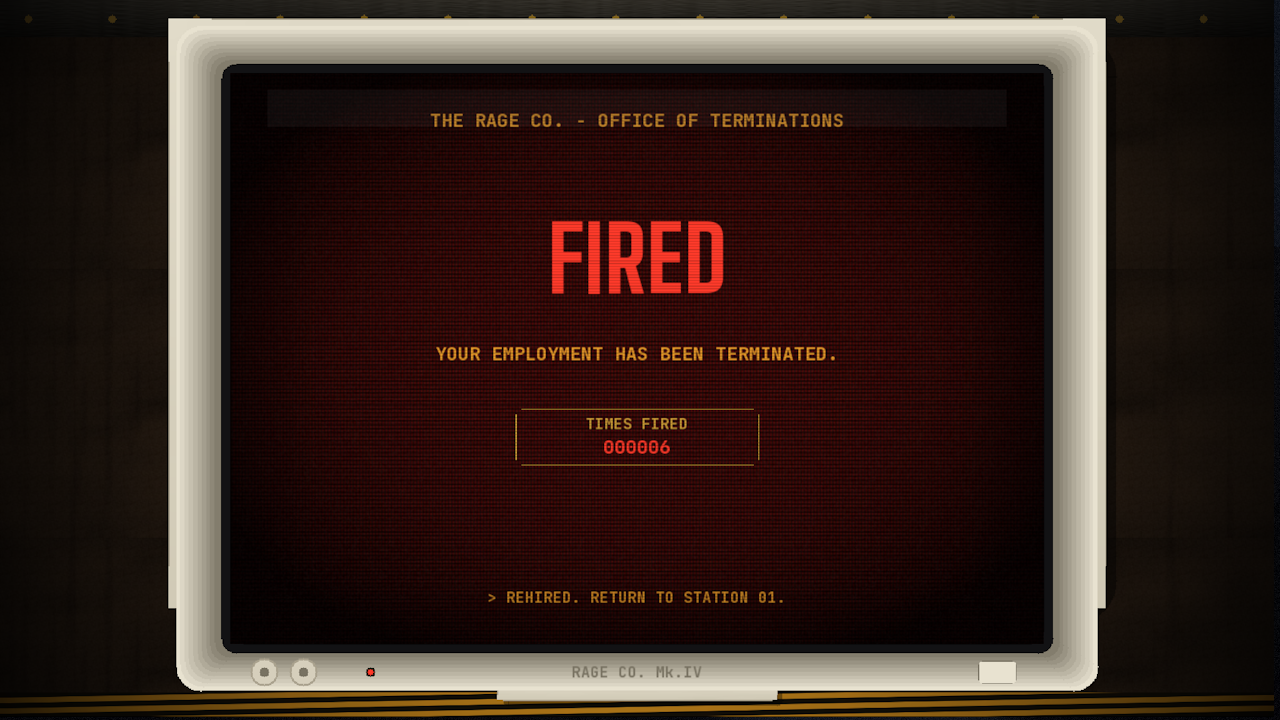
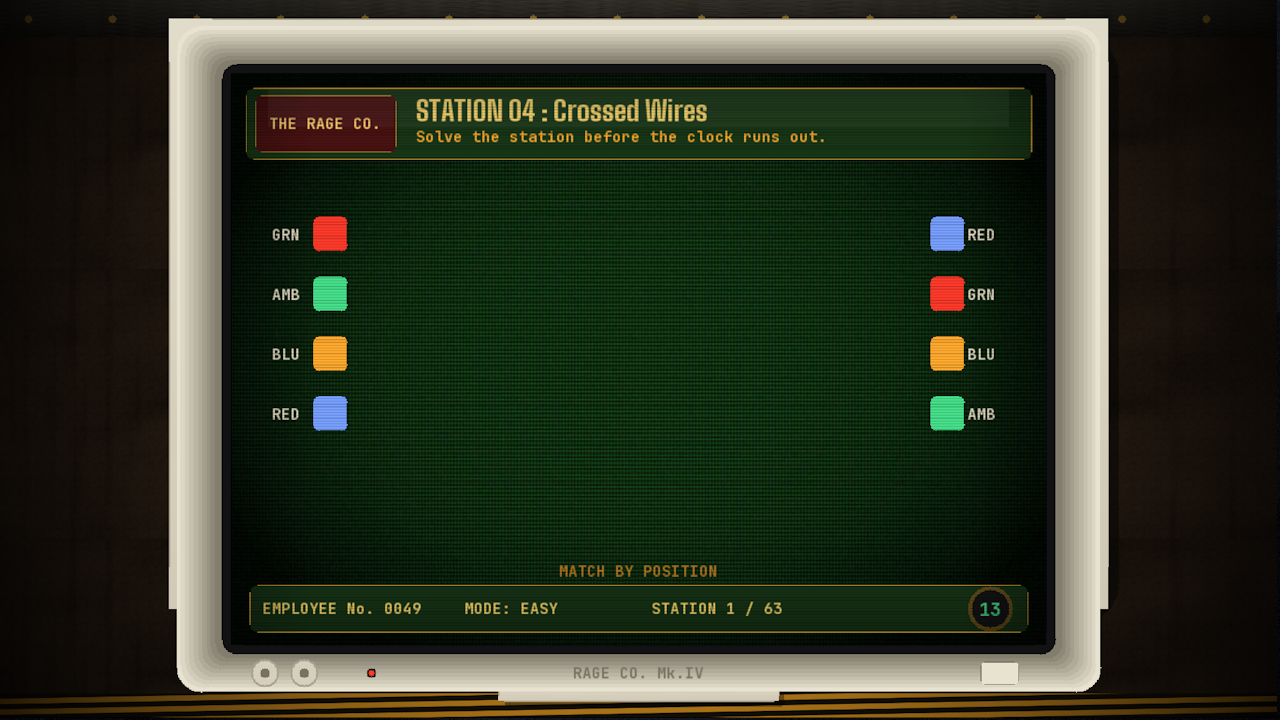
- The header sits in the lighter panel at the top: the station name and a single line telling you the goal.
- The timer runs down from the moment the station appears. The tick speeds up as it drains; the last few seconds bring a siren. When it hits zero, you're fired.
- The catch is the whole game. The big obvious control usually does nothing, or does the wrong thing. Look for the small detail: a mislabelled key, a lying readout, a tiny switch, a control that's inverted.
- Times Fired is shown on the menu and saved between sessions. It only ever goes up.
Surviving a shift
These are principles, not answers — the fun is finding the catches yourself.
- Distrust the obvious. The biggest, reddest, most inviting control on screen is nearly always the trap. Glance at it, then look for what it's distracting you from.
- Read the instruction literally. It never lies. If it says "match the word, not the colour," it means exactly that — your own eyes are the obstacle.
- Suspect every readout and label. Numbers, gauges, and key markings are routinely false. Trust physical behaviour (a tilting beam, a moving needle) over printed values.
- Slow down to speed up. A couple of stations punish haste directly — one fires you for clicking too early, another's target flees a fast cursor. When something resists, try stillness.
- Learn the order. The roster is reshuffled each run, but the catches don't change. Dying teaches you a station for free. Bank that knowledge and the next run is faster.
- Expect the Gauntlet and Overtime. Late stations chain several actions with no pause and always run on the Rage clock. By then you should be executing from memory, not thinking.
Sound & settings
- The game has title music, an in-shift playlist, and station sound effects — the quickening tick and the last-seconds siren are useful timing cues, so play with sound on if you can.
- It runs fullscreen at your display's resolution. Press Esc to leave a screen or return to the menu.
- Progress (your Times Fired and last difficulty) is saved automatically between sessions.
Stuck on the philosophy, not a specific station? That's the right kind of stuck. Tell us how a shift went — what enraged you most is exactly what we want to hear.